Pages

Subscribe:

Banner 468

Advertise

New Templates

Tampilkan postingan dengan label Tech. Tampilkan semua postingan

Rabu, 29 Juli 2015

NASA imagines a drone of your own


MOUNTAIN VIEW, Calif. — Forget getting the latest, greatest cell phone. The next indispensable tech tool may be a drone of your own. And daily life may never be the same.
"I see a time when every home will have a drone. You're going to use a drone to do rooftop inspections. You're going to be able to send a drone to Home Depot to get a screw driver," said Parimal Kopadekar, manager of NASA's Safe Autonomous System Operations Project at Ames Research Center in Mountain View, Calif.
And this won't happen in some long-distant future. "This is in five or 10 years," Kopadekar said Wednesday.
Kopadekar gave a keynote talk at a conference on Unmanned Aerial Systems Traffic Management hosted by NASA and the Silicon Valley Chapter of the Association of Unmanned Vehicle Systems International. The conference, at NASA's Ames Research Center in Mountain View, Calif., runs through Thursday.
"We can completely transform aviation. Quickly," said Dave Vos, lead of Google's secretive Project Wing, which is working with NASA  — as are some 100 other companies — on an air traffic control system for small, low-altitude drones.
An effective air traffic system — needed to keep the skies under 500 feet from turning into a demolition derby — will play a major role in turning drones from a plaything into an engine of the economy, one affecting package delivery, agriculture, hazardous waste oversight and more.
In addition to Google the companies working with NASA include Amazon, Lochheed Martin, RaytheonAirware, DroneDeploy, Matternet, Cisco and Verizon. "We have 125 collaborators and it's growing," said Kopadekar.
Multiple companies could provide this kind of air traffic control for different needs, said Kopadekar.
"That's the idea of this collaboration; we don't want to pick winners. We will want to set the parameters but keep the operation open."
"The FAA is saturated just doing their job," said Ro Bailey, policy director for the Alaska Center for Unmanned Aircraft Systems Integration at the University of Alaska, Fairbanks. "So the how do you solve the problem of managing a massive influx of these unmanned systems which can't see and avoid other people because there's nobody looking?"
Vos says he imagines using the same technology that allows cell phones to talk to each other and the network — systems that also decide which messages go first and ensure that everything gets through in milliseconds.
Bailey said the idea is "brilliant."
"We already have a sophisticated cellular network that has a protocol for who goes first and how things are routed in the fastest possible way," she said.
Another component needed to make drone traffic safe is ADS-B,and Google says it's working on this, as well. That's automatic dependent surveillance – broadcast, a cooperative surveillance technology that allows aircraft to determines their positions via satellites and broadcast them to nearby aircraft.
"We think everyone who wants to build one should be able to build one," Vos said. "Marketplaces that don't have competition, don't really go anywhere."

Selasa, 28 Juli 2015

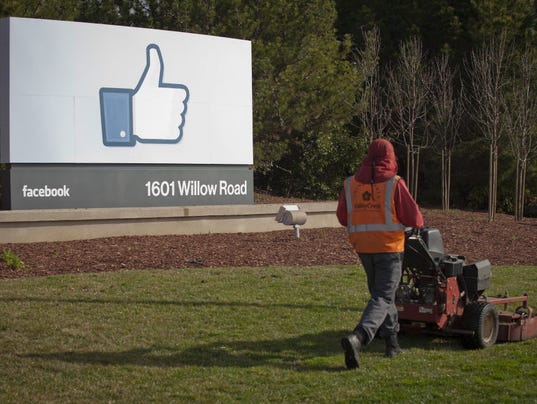
Facebook beats Street but expenses a worry


SAN FRANCISCO — Facebook delivered a Street-beating second quarter with revenue, profits and user growth all exceeding expectations.
The only hitch: Expenses grew even faster.
The Menlo Park, Calif.-based social network reported revenue jumped 39% to $4.04 billion in the second quarter, up from $2.91 billion a year ago.
But that gain was outpaced by total costs which rose 82% from the same quarter a year ago.
Net income fell 9.1% to $719 million, or 25 cents a share, compared with $791 million, or 30 cents a share, a year ago.
Excluding certain expenses, Facebook said it would have earned 50 cents a share. Analysts had expected adjusted earnings of 47 cents.
Facebook shares were volatile in extended trading on Wednesday, seesawing between gains and losses.
Shares, which have been trading near all-time highs, lost 2% following the earnings report. They briefly turned higher during Facebook's conference call when Facebook Chief Financial Officer David Wehner narrowed Facebook's guidance on expense growth rate for 2015 to 55%-60% from 55%-65%. Shares fell again when Wehner said to expect slowing revenue growth for the rest of the year.
Investors are increasingly scrutinizing the expenses of technology companies such as Facebook and Google, said S&P Capital IQ analyst Scott Kessler.
Facebook warned investors earlier this year that costs and expenses would rise dramatically as it invests in long-term projects such as virtual reality, as well as in recruiting top engineers and building new data centers.
"People are worried about runaway, undisciplined, expenses and ultimately, unsuccessful expenses," Kessler said. "But here the proof is in the pudding. Facebook put up the growth numbers and that is what ultimately people want to see."
A growing number of advertisers are turning to Facebook to reach digital consumers, especially on smartphones and tablets. Mobile advertising revenue accounted for 76% of advertising revenue in the quarter. Research firm eMarketer expects Facebook to control 16% of the $69 billion mobile ad market this year. Google is expected to capture 35%.
Consumers continue to spend a lot of their time on Facebook. The number of users who check their account at least once a month grew to 1.49 billion from 1.44 billion last quarter. Of those users, 968 million check their account every day, up from 936 million in the first quarter.
"Facebook's rate of user growth actually picked up this quarter, which makes for a dramatic contrast with Twitter. In fact, Facebook added more daily active users in the U.S. alone in the quarter than Twitter added monthly active users globally," said Jan Dawson, chief analyst with Jackdaw Research. "Facebook growth shows no sign of slowing down, which is incredible when they're just shy of one and a half billion users."
Facebook is also making money from that growth in users, Dawson says.
"The Street must have been expecting something pretty outlandish to react as badly as it has, because this is a really solid set of results," he said.
Shares FB closed up 2% to $97 in regular trading on Wednesday. Facebook announced its second-quarter results after the close of trading.

Senin, 27 Juli 2015

Will consumers upgrade to Windows 10?


LOS ANGELES — Microsoft vows to have 1 billion folks using the new Windows 10 by 2018.
Is that a stretch?
Not really, says analyst Tim Bajarin of Creative Strategies.
The PC industry sells from 275 million to 300 million computers yearly with Windows pre-installed. Three years of sales plus upgrades, “and it’s easy to get to 1 billion,” he says.
Wednesday, the new Windows 10 is available as a download, initially aimed at enthusiasts who signed up to be early adopters.
Richard Doherty, an analyst with the Envisioneering Group, says some 600 million to 650 million users of Windows 7 and Windows 8 qualify for the free upgrade, but most — about two-thirds — will wait a few months before giving it a try.
“It’s always the more technically inclined who start the upgrade process for first 6 to 9 months,” says Bajarin, “The general consumer will wait" because they’ll want to make sure issues with download speeds, lost connections and other kinks are worked out first.
Also, most of the Windows 10 sales will be to businesses, which traditionally stall the longest before upgrading, says Bajarin.
“We don’t expect serious upgrades until the second or third quarter of next year,” he adds.
While Apple computers have a huge presence on TV shows and college campuses and at tech start-ups, it’s good to remember that most consumers and businesses are overwhelmingly Windows based, notes Bajarin.
Apple sells around 16 million computers a year — a far cry from the nearly 300 million Windows PCs.
USA TODAY will have a new app available for Windows 10 in August.

Minggu, 26 Juli 2015

Yelp shares plunge, chairman steps down


Yelp, the crowed-sourced reviews site, has taken a big hit from shareholders after a review of its own.
Shares of the site toppled 28% Wednesday after it reported grim second-quarter earnings Tuesday and also announced that chairman Max Levchin is leaving.
Yelp reported a second-quarter loss of $1.3 million (two cents a share) compared to the $2.7 million (four cents a share) profit it registered for the same quarter a year ago, according to its earnings report released Tuesday.
Due to "lower sales headcount growth" and the elimination of its "brand-advertising product," or display advertising, the company said, it slashed revenue guidance from $544 million to $500 million for the year, which is down from prior guidance of $574 million to $579 million.
Meanwhile, the company announced that Levchin, co-founder of PayPal and an early investor in Yelp, has resigned from his position as chairman of the board of directors to pursue other interests, effective immediately.
The company's board has yet to appoint a new chairman, but plans to consider the issue at its September meeting.
"I am extremely proud of what Yelp has accomplished over the last 11 years and believe I leave it well-positioned to take advantage of the large local advertising market," Levchin said in a statement Tuesday.
Yelp, the digital version of word-of-mouth recommendations, posts reviews of local businesses ranging from boutiques to hair salons to restaurants. The company was founded in 2004, and has taken hold in major metro areas across 31 countries.
The company said approximately 83 million visitors — up 22% from last year — have visited the site via mobile devices on a monthly average basis during the second quarter. Yelp said this quarter was the first time mobile traffic was higher than desktop, which saw about 79 million visitors on an average monthly basis.
"Consumers are increasingly turning to apps when using their mobile phones, and we are excited about the growth we've seen in app usage, which accelerated to 51% year to year," the company said.
For the third quarter, Yelp expects revenue of $139 million to $142 million, which is below Wall Street estimates of $153 million.
Still, CEO Jeremy Stoppelman offered some optimism during Tuesday's earnings report.
"We believe our rich content married with our highly differentiated local advertising product will position us well to capture a meaningful share of the large local market," he said.

Sabtu, 25 Juli 2015

Review - Dmail's self-destructing e-mails


LOS ANGELES - We’ve all done it.
Fired off an e-mail, and then regretted it moments later. Perhaps it was an act of rage, or maybe we spelled something wrong and knew we could do better.
There should be an app for taking back e-mails, right?
Well, there is, and I’ve been playing with it this week. It’s called Dmail, and while I like the concept, I really don’t like the app.
Or put another way, my recipients hate it. They’re upset with me for using Dmail on them.
To use Dmail, you download an extension for Gmail and the Google Chrome browser. It then puts Dmail into your e-mails, and gives you the option of yanking back an e-mail after you’ve sent it. You can also potentially stop folks from forwarding something you’ve sent.
Great--for you. But not for the folks in your address book.
Because in order to work correctly, without offending folks, they too have to have the Dmail extension in their browser and Gmail.
Otherwise, when you write folks, they get a link in an e-mail that they have to open to read your prose.
And let’s face it--how many people do you know who are willing to do that for you?
I wouldn’t.
Once they start screaming at you about making them click a link to read your e-mail, you notice there's an on/off switch in your Gmail window. You can turn off the Dmail feature, and decide to use it sparingly--if at all.
Maybe for sensitive e-mails, like work related stuff. But wouldn't you be using corporate e-mail for that anyway?
Gmail, the world’s most popular e-mail program does have a feature that lets you “undo the send” of an e-mail, but you have to act fast--within 30 seconds.
Dmail lets you do it any time.
I won’t be taking advantage of this feature because. I’ve already deleted it. My correspondents made me do it.