Pages

Subscribe:

Banner 468

Advertise

New Templates

Tampilkan postingan dengan label Natural Science. Tampilkan semua postingan

Minggu, 20 September 2015

THE CUTE AND COMPLICATED SCIENCE OF RAISING TWIN PANDAS


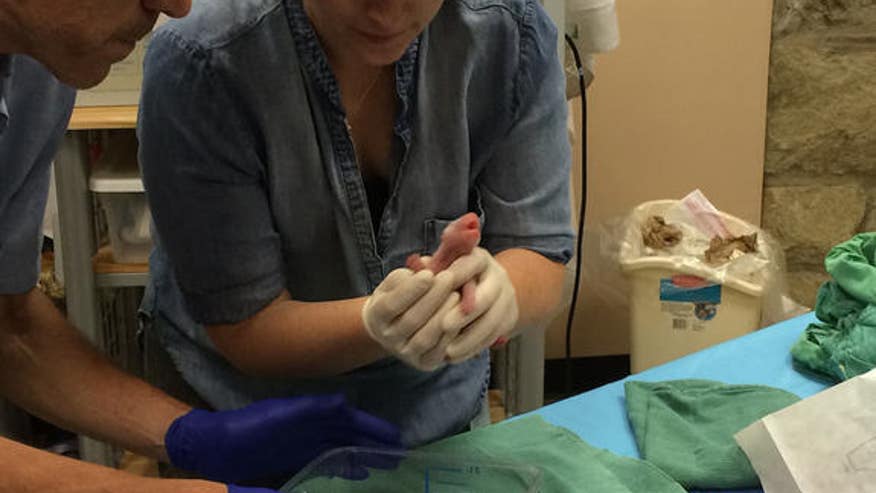
The little panda was cold, low energy and having trouble breathing before its heart stopped beating. But the zoo baby left an indelible mark on its caretakers and admirers before it died, just days after being born to mother Mei Xiang, along with its brother. During its short life, the twin rode atop a lacrosse stick, snuggled with its mother and fed from a bottle, the last of which may have led to its demise.
The final necropsy results aren't complete, but the butter-stick-size panda likely died when fluid got into its lungs and caused inflammation, a condition called aspiration pneumonia. Veterinarians are unsure whether the cub got the condition during a bottle-feeding blunder or from formula it regurgitated, said Dr. Donald Neiffer, the chief veterinarian at Smithsonian's National Zoo.
"Whether or not the baby aspirated some of that [regurgitated] material or whether he aspirated material earlier in the day, we don't know, and we will never know," Neiffer told Live Science. [See Photos of Mei Xiang's New Twin Panda Cubs]
Express delivery
The pink and fuzzy cubs are part of a delicate plan, orchestrated on an international level, to preserve the giant panda species and, one day, introduce captive-bred pandas back into the wild. Just 1,864 giant pandas (Ailuropoda melanoleuca) exist in the wild, according to a 2015 panda census. An additional 395 of the roly-poly fur balls live in breeding centers and zoos around the world, said Devin Murphy, a spokesperson for Smithsonian's National Zoo.
Wild panda numbers increased by about 17 percent in the past decade, according to the 2015 census. American zoos are doing their part to breed and raise the animals, all on loan from China. Right now, there are 13 giant pandas in U.S. zoos, including San Diego Zoo, Memphis Zoo, Zoo Atlanta and the National Zoo.
The new twins were born to Mei Xiang (may-SHONG), the star mother at the National Zoo. Mei Xiang, whose name means "beautiful fragrance," has three surviving offspring, including Tai Shan (born in 2005), who now lives in China; Bao Bao (born in 2013), who lives at the National Zoo; and the surviving panda twin, which will be named 100 days after its birth.

Sabtu, 19 September 2015

HOW ARMORED DINOSAUR GOT ITS BONE-BASHING TAIL


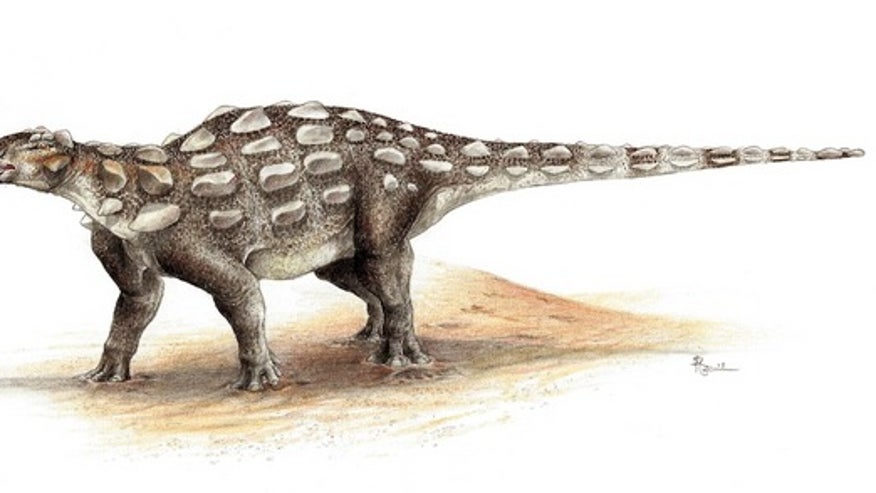
Armored, squat, and built like a tank, ankylosaurs were a type of dinosaur known for their bony, protective exterior and distinct, sledgehammer-shaped tails. Now, scientists have pieced together how the animals' rear-end weapons evolved, finding that the hammer's "handle" came first.
Ankylosaurs were a group of bulky, tanklike dinosaurs with bony plates covering much of their bodies. Some of these animals — a subgroup known as ankylosaurids — also came equipped with a weaponized tail club as well.
"Ankylosaur tail clubs are made of two parts of the body," said study lead author Victoria Arbour, a postdoctoral researcher in the Department of Biological Sciences at North Carolina State University and the North Carolina Museum of Natural Sciences. "They're made of the bones of the tail — the vertebrae — that change so that they’re stiff and lock together in a really characteristic way. We call that the handle, like the handle of an ax. And the other part of the tail is the knob." [Paleo-Art: Dinos Come to Life in Stunning Illustrations]
The knob, or the large ball-type object at the end of the tail, was made of special bones called osteoderms, which actually formed in the skin, the researchers said.
Arbour was interested in examining what part of this weapon evolved first. Was it the handle or the knob? Or did they develop at the same time? "So as I was looking at ankylosaur fossils, for lots of different projects, I always kept an eye out for any evidence for some of those structures. Especially in older specimens I was looking at," she told Live Science.  
One of the fossils that caught Arbour's interest was the Gobisaurus, an ankylosaur that lived in Asia about 90 million years ago. The Gobisaurus' tail bones were fused and locked into a complete handle, but there was no knob at the end of its tail.
This provided a clue about the weapon's evolution, the researchers said. By comparing Gobisaurus with many other ankylosaur species and working them into a timeline, Arbour was able to show that the tails evolved handle-first. The researchers also used computer software to create a kind of family tree of ankylosaurs, which supported their findings.
This suggests that ankylosaurs started developing stiff tails as early as 120 million years ago. The knob was a more recent feature and didn't show up until about 75 million years ago, the researchers said.

BIRD MUMMY'S SECRET: WHY RAPTOR WAS FORCE-FED BY ANCIENT EGYPTIANS


Its last meal wasn't pleasant.
A mouse tail was lodged in its throat when it died. Semi-digested flesh and fur still remained in its stomach when it was wrapped in mummy bandages.
A new autopsy reveals that overeating choked and killed this unfortunate raptor from ancient Egypt. Scientists suspect that Egyptians force-fed the bird so they could offer it to the sun god Ra as a votive mummy.
Mummification wasn't reserved for people in Egypt. The archaeological record is full of examples of cats, dogs, crocodiles and birds that were mummified and used as religious offerings to their corresponding animal gods, a practice that was popular from about 600 B.C. until around A.D. 250, well into the Roman period. Salima Ikram, a professor of Egyptology at the American University in Cairo, has made a living studying these animal mummies, and for her latest research, she examined the ancient remains of a European kestrel from the Iziko Museums of South Africa in Cape Town. [See Photos of Dog Mummies in Ancient Egyptian Catacomb]
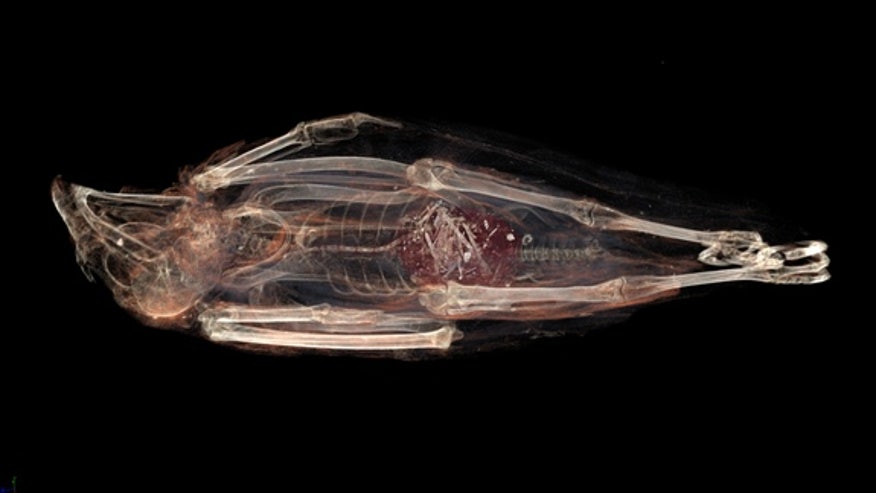
New imaging technologies have made it possible to see through mummies without butchering ancient corpses: Ikram and her colleagues used an X-ray computed tomography scanner at Stellenbosch University in South Africa to see the insides of the kestrel in 3D. The images revealed the bird's stomach was stuffed with bones and teeth from at least two mice —one with its tail inside the raptor's esophagus —and a partially digested sparrow.
The kestrel's skeleton showed no signs of trauma. And whereas other bird mummies in Egypt had their gizzards removed or their beaks packed with food after death, this specimen also had no signs of evisceration. The kestrel was likely desiccated with natron (a naturally occurring soda ash) embalmed with resin and wrapped in bandages (in this case, quite haphazardly) with its stomach contents intact.
"We were extraordinarily surprised by the virtual autopsy as we had no expectation of any contents within the kestrel's body," Ikram said. "To learn that it choked was amazing."
Ikram and her colleagues say it's unlikely the kestrel accidentally or deliberately ate itself to death, as the birds are known to store food when they catch too much for a single meal. Rather, the bird likely had lots of help dying from its captors.

SURPRISE! NEWFOUND VENOMOUS SPIDER DROPS IN ON SCIENTISTS


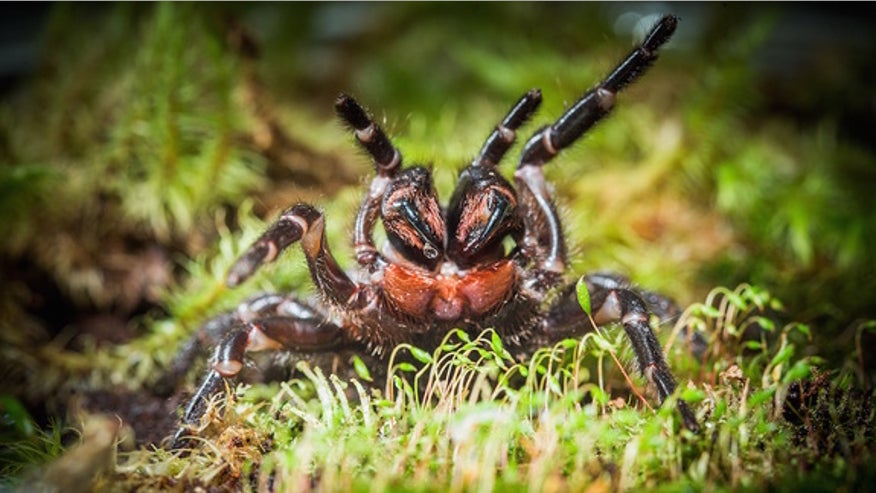
Most people likely wouldn't react well to being surprised by a venomous spider, but recently, scientists at Booderee National Park, on the southern coast of Australia, were excited when a highly venomous funnel-web spider showed up unannounced.   
Many species of funnel-web spiders, named for their funnel-shaped webs, are indigenous to Australia, but only one of these species, the Sydney funnel-web spider, is known to live in Booderee National Park.
Sydney funnel-webs (Atrax robustus) are ground-dwelling spiders with highly venomous bites that, before the development of an anti-venom, posed a serious medical risk to humans. Funnel-webs, including Atrax robustus, were believed to be responsible for at least 13 deaths in Australia before the anti-venom became available, in 1981. [Creepy, Crawly & Incredible: Photos of Spiders]
But the spider found along Australia's southern coast by scientists from the Australian National University (ANU) wasn't Atrax robustus. In fact, it might be a brand-new species of funnel-web spider, said Thomas Wallenius, a biologist at ANU's Research School of Biology and one of the scientists who uncovered the arachnid.
"It's remarkable that we have found this other species in Booderee National Park. It shows we still have a lot to learn about what's out there in the bush," Walleniussaid in a statement.
The nearly 2-inch-long (50 millimeters) specimen is fairly large for a funnel-web spider, the researchers said. And unlike the Sydney funnel-web, this critter lives inside of fallen trees, not in underground burrows. This suggests that the newfound spider belongs to the genus Hadronyche, which consists of funnel-web spiders that are saproxylic, or dependent on dead or decaying wood for survival.
When Wallenius found the spider, it was burrowed in its "lair," a long web inside of a rotten log. 
"They build a silk-lined burrow inside the hollow log, which can be up to 2 meters [6.6 feet] long. She had probably been living in there for 25 to 30 years," Wallenius said.
That's right: Funnel-web spiders aren't just potentially deadly; they also live for an eerily long time. A study presented at the 22nd International Congress of Entomology in 2006 states that captive funnel-web spiders have a maximum life span of two decades.

Jumat, 18 September 2015

HUMMINGBIRDS USE HAWKS FOR HOME SECURITY


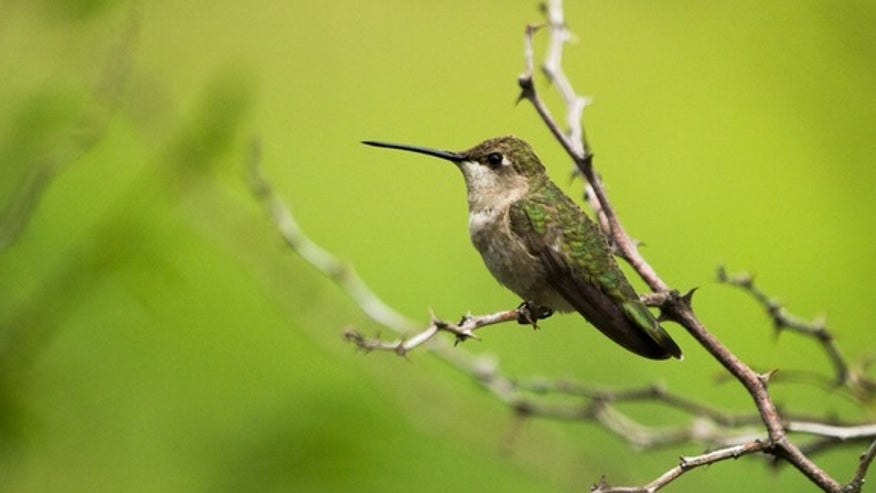
Tiny hummingbird nests, with their coffee-bean-size eggs, are a tempting treat for predators. But a new study finds that hummingbirds have evolved a clever approach to home security: They use hawks as guard dogs.
About 80 percent of the hummingbird nests built in the Chiricahua Mountains of Arizona are clustered near hawk nests, the researchers said. And location matters: When hummingbird nests are built near hawks, the nests have a daily survival rate of 31 percent. Outside of hawk territory, the daily survival rate drops to a mere 6 percent, one study found.
Harold Greeney, a biologist and the founder and director of the Yanayacu Biological Station Cosanga in Ecuador, and his colleagues first published that finding in The Wilson Journal of Ornithology in 2009. It wasn't the first time birds had been shown to nest near predators for protection, he told Live Science. [Gallery: Hummingbirds, Hawks & Predatory Jays]
"It wasn't anything particularly special until we went back and said, 'Well, we think that we showed that they do better there. The question now is, why?'" Greeney said.
The answer, it turns out, is that nesting hawks provide a "cone of safety" extending downward, Greeney and his colleagues report Sept. 4 in the journal Science Advances. Predatory jays that snatch hummingbird eggs avoid this cone to prevent becoming hawk food. (There are records of hawks eating hummingbirds in the wild, but the raptors prefer heartier snacks of large birds and rodents.)
"This is the first time anyone's figured out not just who all the players are, but exactly what it is about those players that's making [this] happen," Greeney said.
Stumbling on a discovery
Greeney and his team studied black-chinned hummingbirds (Archilochus alexandri) in the canyons and river valleys of the Chiricahua Mountains. Discovering that hummingbirds nest close to hawks was a matter of simply walking through the woods and making careful observations, Greeney said. 
"I sort of stumbled on to this, and then I stumbled onto more and stumbled onto a little more," he said. [Images: Beautiful Hummingbirds of the World]
At first, it wasn't clear that the hummingbirds were seeking out hawk nests for safety, Greeney said — maybe both species were simply picking choice nesting spots and clustering together by accident. He recorded the heights and locations of hawk nests, hummingbird nests and the activity of predators, from squirrels to Mexican jays (Ampelocoma wollweberi).
He hoped to see that hummingbird nests within a certain radius of hawk nests would get a survival boost. But when he first plotted the data, he found no such benefit.
"I thought, ugh, back to square one," Greeney said.
Fortunately, though, Greeney had thought like a bird. He hadn't just recorded the horizontal location of nests and predators; he'd recorded their height, too.
And height turned out to be key. The hawks in the area are two particularly agile species, the Cooper's hawk (Accipiter cooperii) and the northern goshawk (Accipiter gentilis). These hawks hunt by perching quietly and waiting for prey to pass below. They then plummet down, dodging tree branches and bringing death from above.
Jays are aware of the danger these hawks pose, so they avoid passing under their perches. As a result, they forage higher up in the forest canopy near hawk roosts. Thus, building within 984 feet of a hawk nest yields a survival rate of 19 percent for hummingbird nests — not bad compared with 6 percent survival rate seen with nests farther away from hawks. But building within the 560-foot radius "cone of safety" boosts the survival rate up to 52 percent, Greeney and his team found.

Selasa, 15 September 2015

SCIENTISTS LOOK TO RE-ANIMATE ANCIENT, GIANT 'FRANKENVIRUS' FOUND IN SIBERIA


It’s alive! Or that’s what scientists might say when they reanimate the so-called “frankenvirus,” a 30,000-year-old giant virus that was discovered in Siberia. The French researchers behind the find – published this week in PNAS, the journal from the U.S. National Academy of Sciences – warn that climate change could reawaken dangerous microscopic pathogens, reports Agence France-Presse.
Since 2003, the virus, known as Mollivirus sibericum, is the fourth kind of prehistoric virus unearthed overall, and the second one discovered by the research team.
The scientists made it clear that they must assess whether the virus could lead to diseases that are dangerous to humans or animals before they “wake it up.”
“A few particles that are still infectious may be enough, in the presence of a vulnerable host, to revive potentially pathogenic viruses,” said Jean-Michel Claverie, one of the lead researchers.
A giant virus has to be longer than half a micron, which is 0.00002 of an inch. By comparison, Mollivirus sibericum, clocks in at 0.6 microns, buried in the permafrost coating northeastern Russia.
Claverie warned that those seeking natural resources like oil in the region must be wary of these large, ancient viruses.
“If we are not careful, and we industrialize these areas without putting safeguards in place, we run the risk of one day waking up viruses such as small pox that we thought were eradicated,” he warned.
Interestingly, these ancient viruses are more complex genetic specimens than their modern counterparts.
Mollivirus sibericum contains more than 500 genes, which pales in comparison to the 2,500 genes belonging to a family of giant virus discovered in 2003. The modern flu – Influenza A – only has eight genes.
The main question surrounding this research is, of course, why? As the climate warms up and the permafrost in Siberia, for instance, starts to increasingly melt, the danger that similar viruses could be released is more of a possibility. For the French research team, studying Mollivirus sibericum could offer a clue to understanding these viruses more.

Rabu, 09 September 2015

FIRST MAGNETIC WORMHOLE CREATED IN LAB


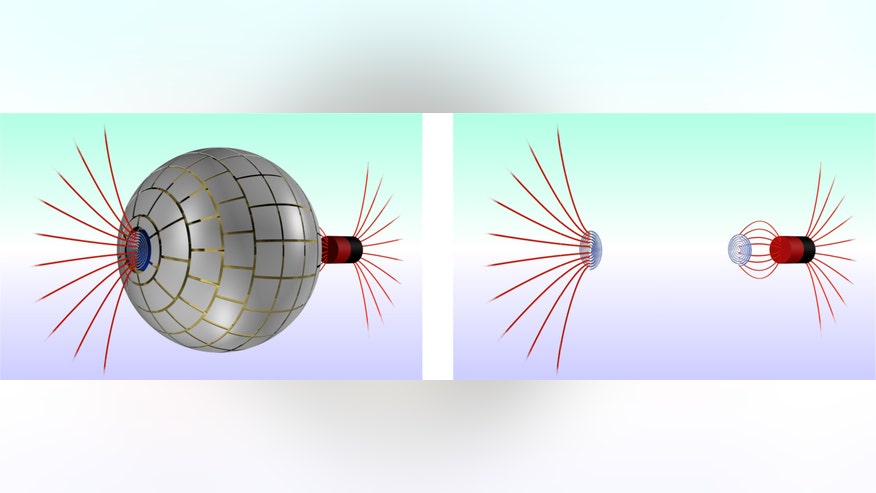
Researchers in Spain have created the first–ever magnetic wormhole in a lab. The specially designed sphere is capable of transferring a magnetic field from one location to another via a process that is magnetically undetectable and only visible by light.
The Autonomous University of Barcelona research team was inspired by the theoretical work of Allan Greenleaf, who, in 2007, introduced the concept of an electromagnetic wormhole that would transfer electromagnetic waves between its ends while the tunnel itself remained electromagnetically invisible. Actually building one, however, proved to be problematic as the materials needed were impractical and hard to work with.
“At a 2013 conference, we met some of the researchers that [came up with] this initial theoretical work and they suggested that we explore whether a wormhole for magnetic fields could be experimentally built,” study co-author and doctoral candidate in physics Jordi Prat–Camps told Foxnews.com. “This inspired us to start this research line. After some intensive research work we realized that the concept was feasible and we developed a magnetic wormhole design that could be realized with existing magnetic materials.”

Unlike the components needed to make an electromagnetic wormhole work, materials required for the magnetic version’s construction were much more readily available– superconductors, for instance, which carry high levels of charged particles and are capable of distorting magnetic field lines.
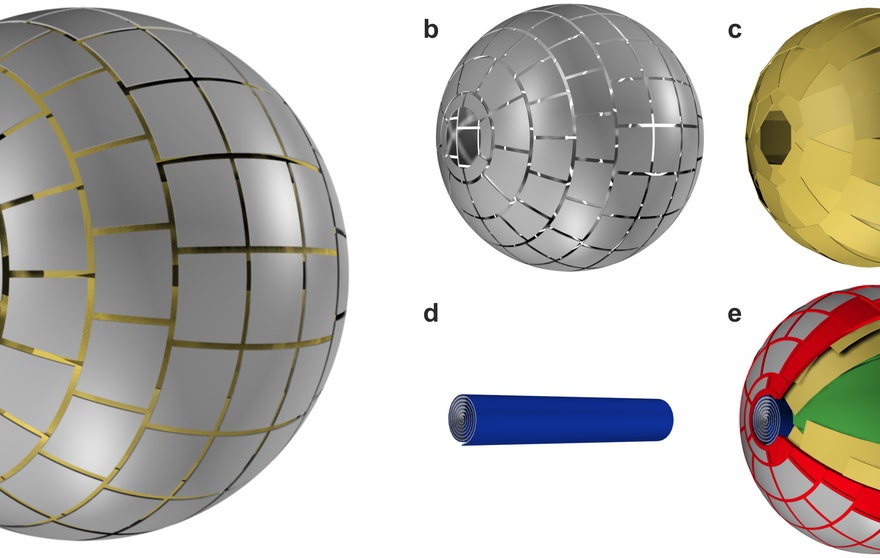
Once they reached a final design, it took about four months to build the actual wormhole and the setup necessary to measure their properties. This work resulted in a three–layered sphere — an outer layer with an iron magnet surface, a second layer consisting of superconducting matter, and finally a ferromagnetic cylinder that passed through the sphere to conduct the magnetic field. By using these metamaterials and metasurfaces to build the cylinder, the researchers were able to take a magnetic field from a source (a magnet or electromagnet) and introduce it to one end of the sphere before it appears at the other end while leaving no trace of the journey in between.
When most of us think of wormholes, we think of the famous gravitational ones that exist in space (as depicted in films like Interstellar”) which allow anything that enters it to travel instantaneously between long distances. However, those hoping to travel through space and time with this new tech shouldn’t get their hopes up, as the wormhole Prat–Camps and his team have created works a little differently.
“The wormhole we have developed is a spatial wormhole for magnetic fields,” he said. “This means that the device transfers magnetic fields from one point in space to another point through a path that is magnetically undetectable, i.e. as if the transfer was made through an extra spatial dimension. The design only works for magnetic fields and, thus, cannot transfer matter as gravitational wormholes would.”