Pages

Subscribe:

Banner 468

Advertise

New Templates

Tampilkan postingan dengan label Opinion. Tampilkan semua postingan

Minggu, 19 Juli 2015

Brady, Patriots & NFL come out on top: Column


It may seem unlikely today, but when all is said and done with Deflategate and Tom Brady returns to the field, the Patriots, the NFL and even Brady all stand to emerge as winners in business over the long-term.
To be sure, the Deflategate crisis has been fraught with controversial questions. Was the “more probable than not” evidence cited in the Wells Report strong enough to convict Tom Brady? If so, what is a reasonable punishment?  How serious of an offense is deflating footballs? How should Brady’s cooperation (or alleged lack thereof) in the investigation, including the recent revelation of his destroyed cell phone, factor into the punishment and appeal process?  Fans and the media have been deliberating these and other issues with the same fervor as ranking the greatest quarterbacks of all-time (which, naturally, has been complicated by the allegations against Brady).
But when you examine this controversy from a business standpoint, the long-term brand and revenue implications (based on what we know now) could be minimal. Imagine the scene at Lucas Oil Stadium on Sunday, October 18, 2015. TheNew England Patriots will visit the Indianapolis Colts for the game of the week on Sunday Night Football. If Brady serves his four-game suspension, he will be back under center that night for the first time in the 2015 regular season, playing against the same team that first reported the charges that are dominating this year’s NFL offseason.
This made-for-television storyline will likely generate pregame hype nearing Super Bowl proportions and come close to (if not surpass) a record regular season rating.  It’s tough to accurately predict who will win the game, but the safest best is that October 18th will be yet another banner night for the National Football League.
Indeed, all key parties in the Deflategate controversy (the Patriots, NFL, and Brady) have an opportunity to move on from this situation and strengthen their position over the long-term. Here’s why:
The Patriots have built and maintained a loyal fan base that is standing by the team through good times and bad.  From a business perspective, it matters little that they are the most disliked team in America right now.  As long as the team’s target audience — Patriots fans — remains fully in support of the team, the brand will stay healthy. And if the #FreeBrady movement online and offline is any indication, fan loyalty to the defending Super Bowl champions has never been stronger. If anything, Deflategate has emboldened Patriots Nation, creating an us-against-the-world mentality, and, by extension, strengthened the Patriots brand overall.

Sabtu, 18 Juli 2015

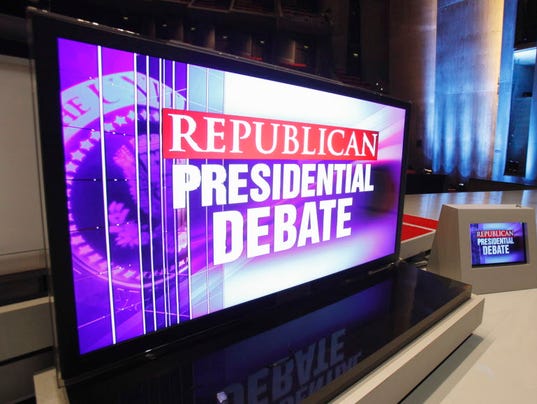
TV debates warp political process: Opposing view


Political wonks and junkies breathlessly await the first televised “debate” of the primary season. But sensible voters will do something more productive on debate night. Taking a walk or going to a ballgame will be better than watching 10 overprepared GOP candidates try to upstage each other with verbal brickbats and one-liners.
Political debates have become nothing more than media events that do little to promote reasoned, in-depth discussion. Cable news channels stand in line to program them to promote their brand, get a ratings boost, showcase their talent, and insert themselves into a political brawl. Their producers make the events look like a cross between the Super Bowl and Dancing With the Stars, hardly a venue for thoughtful political dialogue.
Television is a medium of emotion, and as such, warps the process of selecting who is best suited to lead the nation. Candidates are advised by slick handlers to stick to simplistic catchphrases, and toss in a few zingers along the way. Television forces candidates to worry more about their on-screen image than about how to explain their policy for improving the economy. Any candidate who seriously tries to make debating points and explain the nuances of a complex matter will come off as boring and calculating.
Afterward, the media will immediately start declaring who “won,” as if winning a debate 15 months before Election Day will help the electorate decide who’s best suited to confront Islamic State terrorists. There is little transferability of television debating skill into international diplomacy, working with Congress, or any other presidential duty that matters.
The candidate who can make the most noise on debate night will be viewed as having advanced his candidacy, and the less showy but more sensible candidate will be dismissed. Remember, many pundits thought Newt Gingrich won the early GOP debates in 2012.
John Kennedy warned in 1959 that television would force politics into the realm of public relations and “gimmickry.” Televised debates are all of that. These concocted events will not be the stuff of Lincoln-Douglas. Our nation’s political process suffers as a result.

GOP debates will be noisy but useful: Our view


Ready or not, here they come. The Republican presidential debates are almost upon us. And, suffice it to say, they are causing considerable consternation.
Party insiders fret that real estate mogul Donald Trump, or some other candidate, might hog the limelight and harm the GOP cause. Many outsiders dismiss the debates as useless political theater. And just about everyone has something bad to say about how the television networks plan to exclude candidates who don’t reach a certain threshold in polling averages.
Apart from a candidate forum on C-SPAN that hasn't attracted widespread interest, thefirst debate is set for Cleveland next Thursday. It has already set off what amounts to a race for 10th place. That’s because the sponsoring network, Fox News, says it will take only the top 10 in polling averages for its prime-time debate. Candidates who don't make the cut will be relegated to a B-team event starting at 5 p.m. ET. .
Critics point out that the difference between someone polling at, say, 2.4% and someone at 2.2% is statistically insignificant. Nor is it lost on anyone that a recent uptick in juvenile name-calling and beyond-the-pale provocations would appear to be partly driven by some candidates’ desperate desire to get attention and boost their poll numbers.
For these and other reasons, it might be tempting to dismiss the debates as pointless exercises that won’t provide much information for voters. That would be a mistake. While debates have never been a good gauge of a potential president's strategic decision-making or management experience, they are useful in exposing flaws and demonstrating communication skills.
Think back to the much-derided debates among contenders for the 2012 Republican nomination.
Then-Texas Gov. Rick Perry showed himself in a November 2011 debate as not ready for prime time, and perhaps for the presidency, when he proclaimed that he would shut down three Cabinet departments and then — "oops" — couldn’t name them.
This came a month after former pizza chain executive Herman Cain had his woefully impractical “9-9-9" tax plan ripped apart by fellow Republicans. As Michele Bachmannaptly quipped: “When you take the 9-9-9 plan and you turn it upside down, I think the devil’s in the details.”
The debates also showed general election voters just how far the party had swung to the right. They saw Bachmann strenuously arguing against childhood vaccinationprograms and the entire field refusing to raise taxes even if paired with a plan to cut spending by 10 times as much.

Jumat, 17 Juli 2015

Iran nuclear deal bigger than partisan politics: Your Say


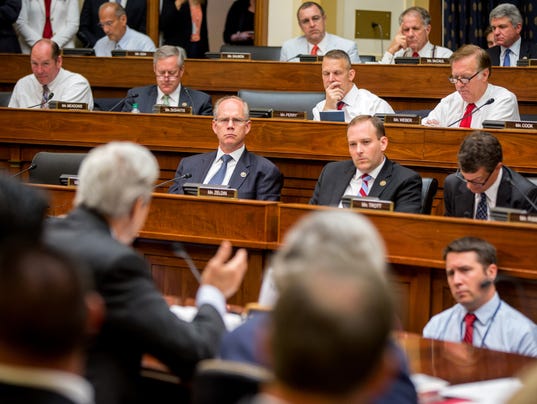
The Obama administration defended the Iran deal before the House Foreign Affairs Committee this week. Letter to the editor:
One of the most disconcerting consequences of the disagreement regarding the Iran nuclear accord is highlighted by President Obama’s statement that he would veto any legislation blocking the deal.
As a sign of potential cooperation between the legislative and executive branches, Americans would have appreciated a statement suggesting Obama would welcome input on the terms of the deal. This would not negate the option of ultimately responding with a veto after the healthy exchange of contrasting viewpoints. Congress has not always been cooperative, but if the president were “willing to unclench” his fist, maybe it would “extend a hand.”
Brian Mai; Laurel Springs, N.J.
Comments from Facebook are edited for clarity and grammar:
This agreement at best kicks the can down the road a decade, while Iran not only regains frozen assets but profits from economic interaction.
— Michael Golden
The problem here is not trying to get American voters on board so the polling looks better, but to get Congress to understand that this deal is bigger than placating Israel and Iran having nuclear technology. Future political ramifications and potential conflicts are what’s at stake.
— David Hoeltje
War is used to change the attitude of the enemy when negotiations break down. Soldiers are trained to kill and destroy. There are better ways to do things than mongering war. Mongering peace can work if given a chance. War is costly.

Kamis, 16 Juli 2015

Boy Scouts ride sea change on gay rights: Opinionline


Gary Stein, Sun Sentinel, Fort Lauderdale, Fla.: “TheBoy Scouts of America have finally ended their prejudiced ban against openly gay adult leaders and employees. Too bad some religious groups want to keep the discrimination in place. ... Sorry, but the Boy Scouts did the right thing. The year is 2015, folks. Religious beliefs belong in your house of worship or your own home.”
The Charlotte (N.C.) Observer, editorial: “The new policy isn’t perfect, but it is a compromise that allows opposing viewpoints to coexist beneath the same tent. That’s no small feat, given the deeply divergent, passionately held views on both sides of this debate. ... This situation offers an opportunity to show (Boy Scouts) what it means to live in peace — even when not in complete harmony — with one’s neighbors.”
Ed Morrissey, Hot Air: “The problem seems to be that BSA did not replace its policy of exclusion with a mandate for inclusion. Practically speaking, such a mandate would be tough to enforce, and would almost certainly cause a collapse of membership. Even this moderate change threatens to alienate one of BSA’s biggest partners, theMormons. ... The net effect ... will be to drive religious organizations away fromScouting, to the detriment of all concerned.”
Richard Matthews, Crisis Magazine: “The BSA has chosen to follow Caesar in all things, to embrace the culture of political correctness and moral relativism. It would be wrong to allow nostalgia to blind us from doing what is best for our young people, our families, our church and ... our country. It is time for Christians to shake the dust from their feet and leave the Boy Scouts of America in order to focus on nurturing, strengthening and living our faith in environments that protect the moral, emotional, physical and spiritual health of our children.”
Scott Shackford, Reason: “This is just another piece in our significant cultural shift toward gay inclusion. ... But this change is significantly different (from the Department of Defense ending its ‘don’t ask, don’t tell’ policy and the recent Supreme Court decision striking down state bans on same-sex marriage): It comes at the hands of the organization itself and the culture that supports it, not via government order. ... Regardless of whether a person supports the Scouts’ decision, this is the absolute right way for social change to happen.”

Selasa, 14 Juli 2015

El Chapo escape highlights need to extradite


On the evening of July 11, Joaquín “El Chapo” Guzmán, the kingpin of the Sinaloa cartel, disappeared from his cell at a maximum-security prison in Altiplano, Mexico. It is no surprise that Guzmán, who pioneered the use of sophisticated tunnels to move drugs beneath the border, escaped through a tunnel that was reportedly a mile long and outfitted with a ventilation system, electricity and even a motorcycle on rails. This wasn’t his first flight from a maximum-security facility, either. In 2001, he exited Puente Grande prison in a laundry cart, evidently aided by upwards of 70 prison staff and millions of dollars in bribes.
After that escape, Guzmán spent over a decade on the run before he was arrestedagain in February 2014. His capture was a major victory for the Mexican government, yet his breakout from prison seventeen months later is a colossal embarrassment and a major blow to Mexican citizens’ confidence in their government and institutions.
Guzmán’s disappearing act says less about the physical security of Mexico’s prisons than it does about the ability of powerful drug lords to reach nearly anyone through bribery, corruption and intimidation. After all, Guzmán did not painstakingly cut his way free with power tools; instead, he left Altiplano by way of a custom-built tunnel, aided by a vast criminal network and the criminally derived wealth that landed him on Forbes' The World's Billionaires list in 2009.
His escape demonstrates what many on both sides of the border already knew — as things stand today, Mexico cannot successfully prosecute and incarcerate such a powerful kingpin. Its criminal justice system is too weak, and its top criminals remain above the law. Bringing down a kingpin such as Guzmán requires a functioning criminal justice system and effective forfeiture laws. Mexico has neither, and until it does, the government should pursue extradition in order to “disarm” key traffickers and cut them off from their criminal organizations.
After Guzmán’s capture last year, many believed he would be sent to the United States, where he has been indicted on charges in at least seven federal jurisdictions. The U.S. informally urged Mexico to hand him over soon after his arrest, and latersubmitted a formal request for his extradition. However, Jesús Murillo Karam, Mexico’s attorney general at the time, was reluctant to do so, and stated this January that extraditing Guzmán was out of the question for reasons of national sovereignty.
Ironically, voluntarily extraditing Guzmán to the USA would not have threatened Mexico’s sovereignty. Instead, the real threat comes from a handful of vicious and powerful criminal organizations, including Guzmán’s Sinaloa cartel, which remains the most powerful criminal organization in the world. These cartels corrupt at all levels and effectively control sizable chunks of Mexican territory, including parts of the states of Sinaloa, Tamaulipas and, until recently, Michoacán. While the full extent of their damage is incalculable, rough estimates place the death toll over the past decade at more than 120,000.